Every brand wants more conversions. More sign-ups, more demo requests, more purchases, more calls booked. And yet the most effective conversion tool available to most businesses is one they have not yet deployed: a professionally produced explainer video.
This is not a claim based on anecdote. There is a substantial and growing body of data showing that animated explainer videos — when well-crafted and strategically placed — have a measurable and often dramatic impact on conversion rates across industries, funnel stages, and channels. This article walks through the evidence, the mechanisms, and the practical frameworks that make explainer videos one of the highest-ROI marketing investments a startup or enterprise brand can make in 2026.
The question is no longer whether video drives conversions. The question is whether your brand is leaving those conversions on the table.
What Is an Explainer Video?
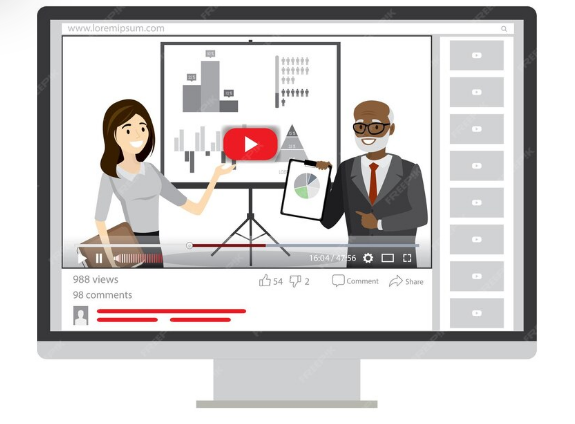
An explainer video is a short, focused animated video — typically 60 to 120 seconds — designed to communicate what a product, service, or concept is, who it is for, and why it matters. Unlike brand films or testimonial videos, explainer videos are built around a single, clear objective: making the viewer understand something quickly enough that they are compelled to take a next step.
The best explainer videos share four structural qualities: they lead with the problem the viewer already feels, they present a clear and credible solution, they communicate the mechanism (how the solution works) without getting lost in technical detail, and they end with a direct, frictionless call to action.
Most explainer videos used in marketing are 2D animated, for several reasons: animation is platform-agnostic, requires no on-screen talent, can be updated without a reshoot, and communicates abstract concepts — software, processes, ideas — with far more clarity than live-action footage.
The Data: What Explainer Videos Actually Do to Conversion Rates
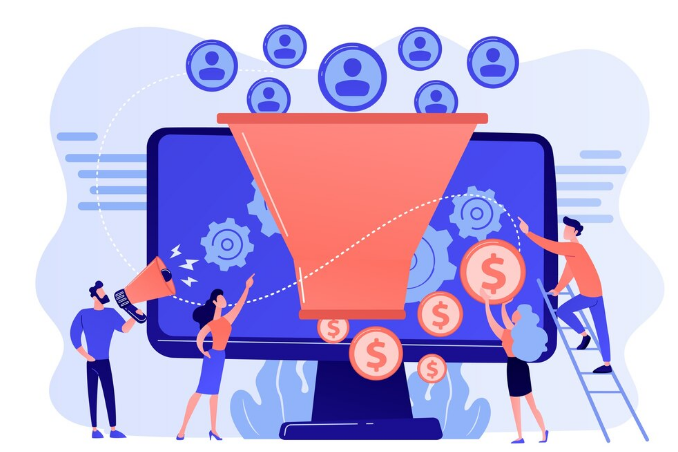
Let us look at what the research and industry data consistently show about explainer videos and their impact on business metrics.
Landing Page Conversion Rates
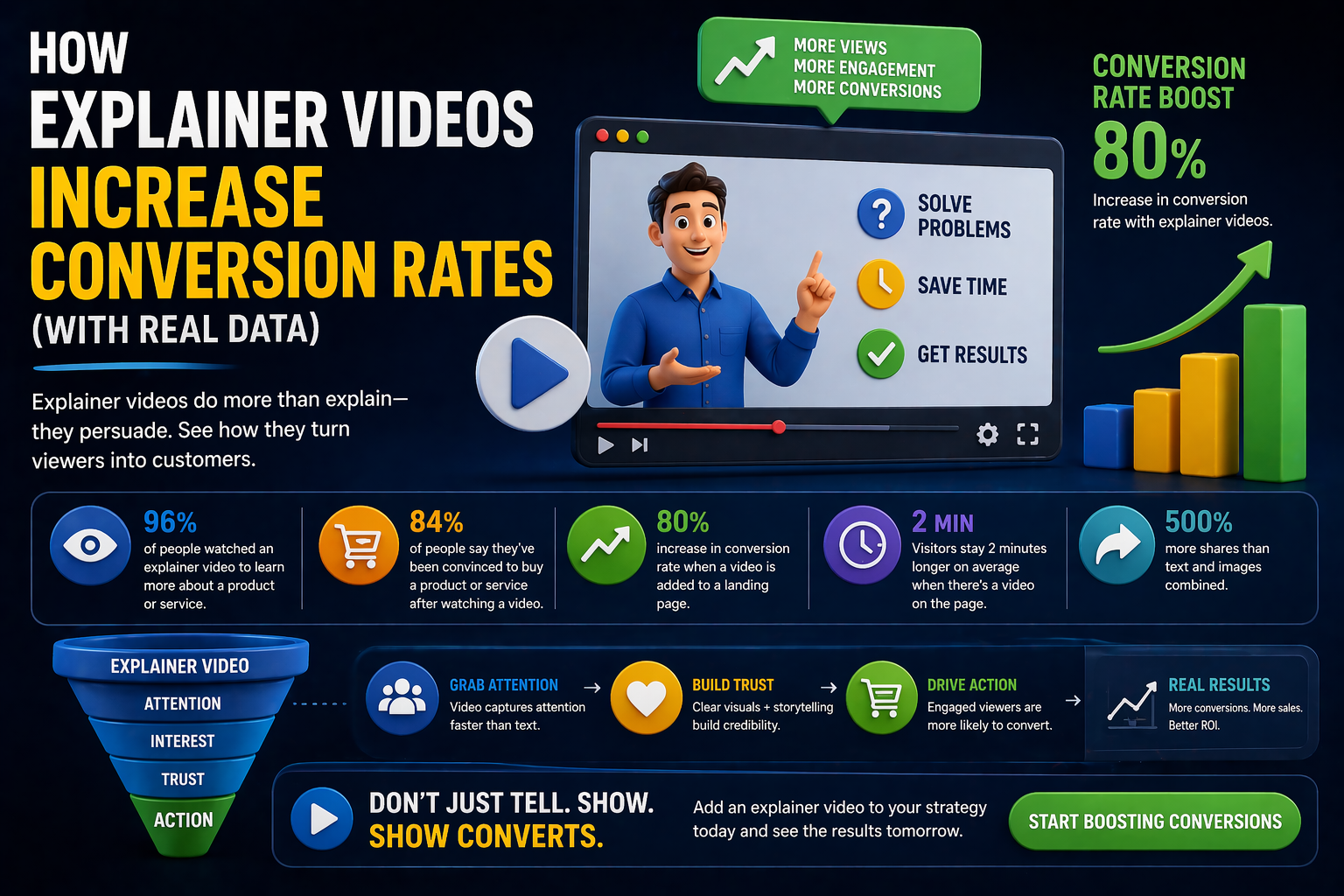
Video on landing pages is one of the most studied variables in conversion rate optimization. Across multiple large-scale analyses, landing pages featuring an explainer video above the fold show conversion rate improvements ranging from 20% to over 80% compared to equivalent pages with static content. The range is wide because results depend heavily on video quality, relevance to the page’s offer, and load speed — but even conservative estimates consistently show a meaningful positive effect.
Landing pages with video convert up to 80% better than those without, across multiple conversion rate optimization studies.
Bounce Rate Reduction
Video increases average time-on-page significantly. A visitor who watches a 90-second explainer video spends at least 90 more seconds on your site than one who arrives to a text-only page. This has a compounding effect: longer sessions signal relevance to Google (improving SEO rankings), reduce bounce rate, and increase the likelihood that a visitor continues deeper into the site rather than leaving.
Email Click-Through Rates
Adding video — or even just the word ‘video’ in an email subject line — increases open and click-through rates meaningfully. Campaigns that include an animated GIF or video thumbnail linking to an explainer video see click-through rate improvements of 20–30% compared to static email campaigns with equivalent offers.
Paid Advertising Performance
Animated explainer content used as video ads on YouTube, LinkedIn, and Meta consistently outperforms static image ads in cost-per-click and conversion rate metrics. Because animated video captures attention in feeds and sustains it for longer, the platform algorithms reward it with lower CPMs and broader reach. For startups with limited ad budgets, a single well-produced animated ad can stretch paid media spend significantly further than static creative.
Sales Cycle Compression
For B2B brands with long sales cycles, explainer videos serve a critical function in the mid-funnel. When a prospect is evaluating your solution but has not yet spoken with sales, a clear animated video on your pricing page, demo page, or in a follow-up email can answer objections, demonstrate value, and accelerate the decision — effectively shortening the average sales cycle without requiring additional headcount.
In competitive B2B markets, the brand that educates the buyer fastest wins. Explainer videos are the fastest educators in your content arsenal.
Why Animated Explainer Videos Specifically?
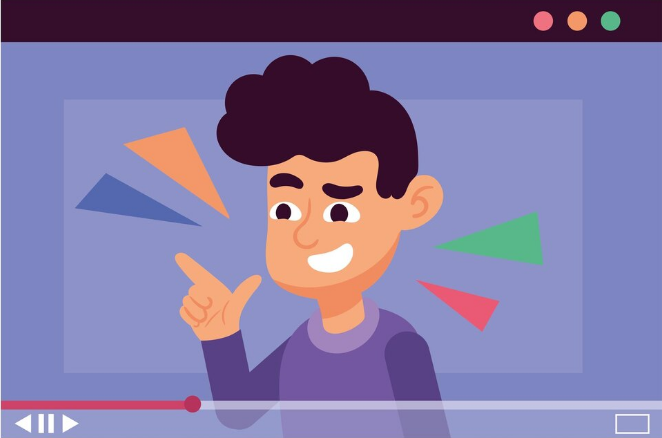
Video in general drives conversions — but animated explainer videos outperform their live-action equivalents in specific and important ways for most business contexts.
They Visualize the Invisible
Most products and services — especially in software, finance, healthcare, and professional services — involve processes, systems, or transformations that cannot be filmed. Animation can visualize any concept, no matter how abstract. A SaaS workflow, a financial mechanism, a regulatory process — animation shows what live action cannot.
They Are Brand-Consistent by Design
Live-action video is inherently constrained by real-world variables: lighting, location, casting, wardrobe. Animation is entirely controlled. Every frame reflects deliberate design choices that align with your brand’s colors, typography, character style, and voice. For brand-conscious companies, this level of control is invaluable.
They Age Better
A live-action video from three years ago often looks dated — different hairstyles, office decor, software UI. An animated explainer video ages more gracefully and can be updated scene by scene without reshooting the entire production. For products that evolve, this is a significant long-term cost advantage.
They Work Without Sound
Over 85% of social media video is watched without sound on first view. Animated explainer videos with strong visual storytelling and on-screen text communicate the core message even when muted — a critical advantage in social and paid media environments where autoplay without audio is the norm.
Where to Deploy Explainer Videos for Maximum Conversion Impact
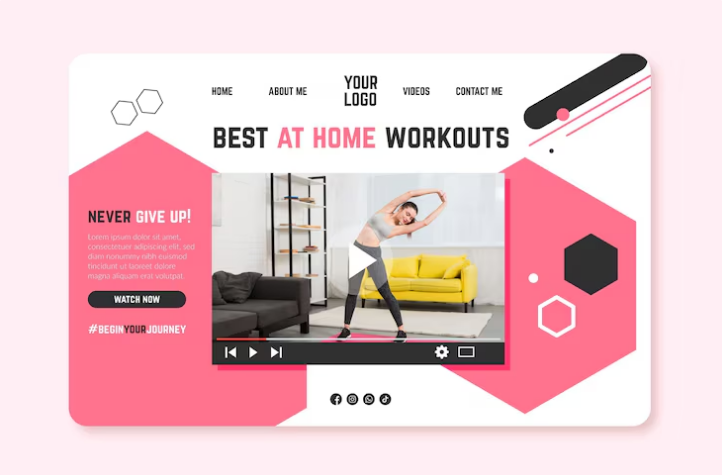
The placement of an explainer video matters as much as the quality of the video itself. Here are the highest-impact deployment positions, validated by conversion data.
Homepage Hero Section
This is the single highest-leverage placement for most businesses. Visitors who land on your homepage have demonstrated intent — they looked you up or clicked your ad. A 60–90 second explainer video in the hero section answers the visitor’s first question (what is this?) immediately, before they have to scroll or search.
Product and Service Pages
Each core service or product deserves its own explainer video. Visitors to a specific service page are deeper in the funnel and ready for more detail. A video that explains how the service works, who it is for, and what results it delivers will convert this traffic at significantly higher rates than copy and images alone.
Pricing Pages
Pricing pages are among the highest-exit pages on most business websites. An explainer video on the pricing page — even a short 45-second version focused on value rather than features — can meaningfully reduce exits and increase the number of visitors who proceed to contact or purchase.
Email Nurture Sequences
A single explainer video embedded or linked in an email nurture sequence gives prospects a low-effort, high-engagement way to learn more between touchpoints. This is particularly effective in B2B sequences where the lead has opted in but not yet booked a call.
Paid Media and Remarketing
Cut your explainer video into 15- and 30-second versions for use in paid campaigns. Remarketing audiences — people who visited your website without converting — respond particularly well to animated explainer ads that address a specific objection or use case they may have encountered during their visit.
One Click Animation specializes in explainer video production for US startups and enterprise brands. We handle strategy, scripting, animation, voiceover, and delivery — so you get a video that converts, not just one that looks good. Request a free project consultation today.
What Makes an Explainer Video Actually Convert?
Not all explainer videos drive results. The gap between a video that converts and one that underperforms almost always comes down to the same set of variables.
Script Clarity
The script is the single most important component of a converting explainer video. A weak script — one that leads with company history, uses industry jargon, or buries the value proposition — will underperform regardless of how beautiful the animation is. The script must lead with the viewer’s problem, get to the solution within the first ten seconds, and maintain momentum throughout.
Duration Discipline
Shorter is almost always better. For most top-of-funnel applications, 60–90 seconds is the optimal duration. Attention drops sharply after the 90-second mark for first-time viewers. If your message cannot be communicated in 90 seconds, the problem is usually with the script — not with the concept.
A Clear, Single Call to Action
Every explainer video should end with one specific action you want the viewer to take. Not three options. One. Whether that is starting a free trial, booking a demo, or downloading a guide — the CTA should be direct, low-friction, and visually prominent in the final frames.
Voiceover and Audio Quality
Poor audio undermines excellent animation. A professional voiceover artist with a tone, pace, and accent that matches your target audience is a non-negotiable component of a high-converting video. The music bed should support emotional engagement without competing with the narration.
Frequently Asked Questions About Explainer Video Production
Q1: How much does an explainer video cost to produce?
Professional explainer video production in the US market typically ranges from $3,000 to $25,000 for a finished 60–90 second animated video, depending on the studio, animation style, and complexity. Simple motion graphics sit at the lower end; fully illustrated character animation with custom design sits at the higher end. Very low-cost options — under $1,500 — almost universally involve template-based tools or offshore production, which carries significant brand quality and communication risks. The investment in a professionally produced explainer video typically pays for itself within the first 60–90 days when deployed on a converting landing page or in paid media.
Q2: How long should my explainer video be?
For most business applications, 60–90 seconds is the optimal length. Homepage and social media videos should aim for 60 seconds or less. Product page and mid-funnel videos can extend to 90–120 seconds when additional detail serves the viewer’s decision-making process. Onboarding and educational videos can run 2–3 minutes if the audience has already demonstrated strong intent. The key principle: the video should be as short as it can be while still communicating the complete message needed to move the viewer to the intended action.
Q3: Do I need a script before approaching an explainer video company?
No — and you should be cautious of studios that require a finished script before engaging. The script development phase is one of the most strategically valuable parts of the production process, and a capable explainer video production company will guide you through it. What you do need before starting is clarity on your goal (what action should the viewer take?), your target audience (who is watching, and what do they already know?), and your core message (what is the single most important thing to communicate?). From those inputs, a professional team can develop a script that is built to convert rather than simply to describe.
Q4: Can one explainer video work across multiple channels?
Yes — and a well-produced explainer video should be planned from the outset with multi-channel use in mind. The full-length version (60–90 seconds) lives on your website and YouTube. A 30-second cut serves LinkedIn and Instagram. A 15-second cut runs as a paid ad or pre-roll. Static frames from the animation can be used as social posts and email imagery. Animated GIFs derived from specific scenes work in email and banner ads. One investment, when executed with a distribution strategy in mind, can generate 6–8 distinct content assets across channels.
Q5: How do I measure whether my explainer video is working?
The metrics you track should match the placement and goal of the video. For landing pages, track conversion rate before and after video deployment using your existing analytics tool. For paid video ads, track view-through rate, click-through rate, and cost per conversion. For email campaigns, compare open and click-through rates on sends that include video versus those that do not. For onboarding videos, track feature adoption rates and support ticket volume before and after deployment. The most important thing is to establish a baseline before the video goes live so you have a clean before-and-after comparison.
Q6: What industries benefit most from explainer videos?
While explainer videos work across virtually every industry, they deliver the highest impact in categories where the product or service is abstract, complex, or unfamiliar to the buyer. This includes SaaS and software products, financial services and fintech, healthcare and medical technology, professional and B2B services, and any emerging technology or platform. Consumer product brands also benefit significantly, particularly when the product has a mechanism or origin story that differentiates it from category competitors. If your sales team regularly finds themselves explaining what your product does before they can sell it, an explainer video will have an immediate and measurable impact.
One Click Animation produces high-converting explainer videos for startups and enterprise brands across the United States. We handle everything — from strategy and script to animation, voiceover, and final delivery. Speak with our team to explore what an explainer video could do for your conversion rate.